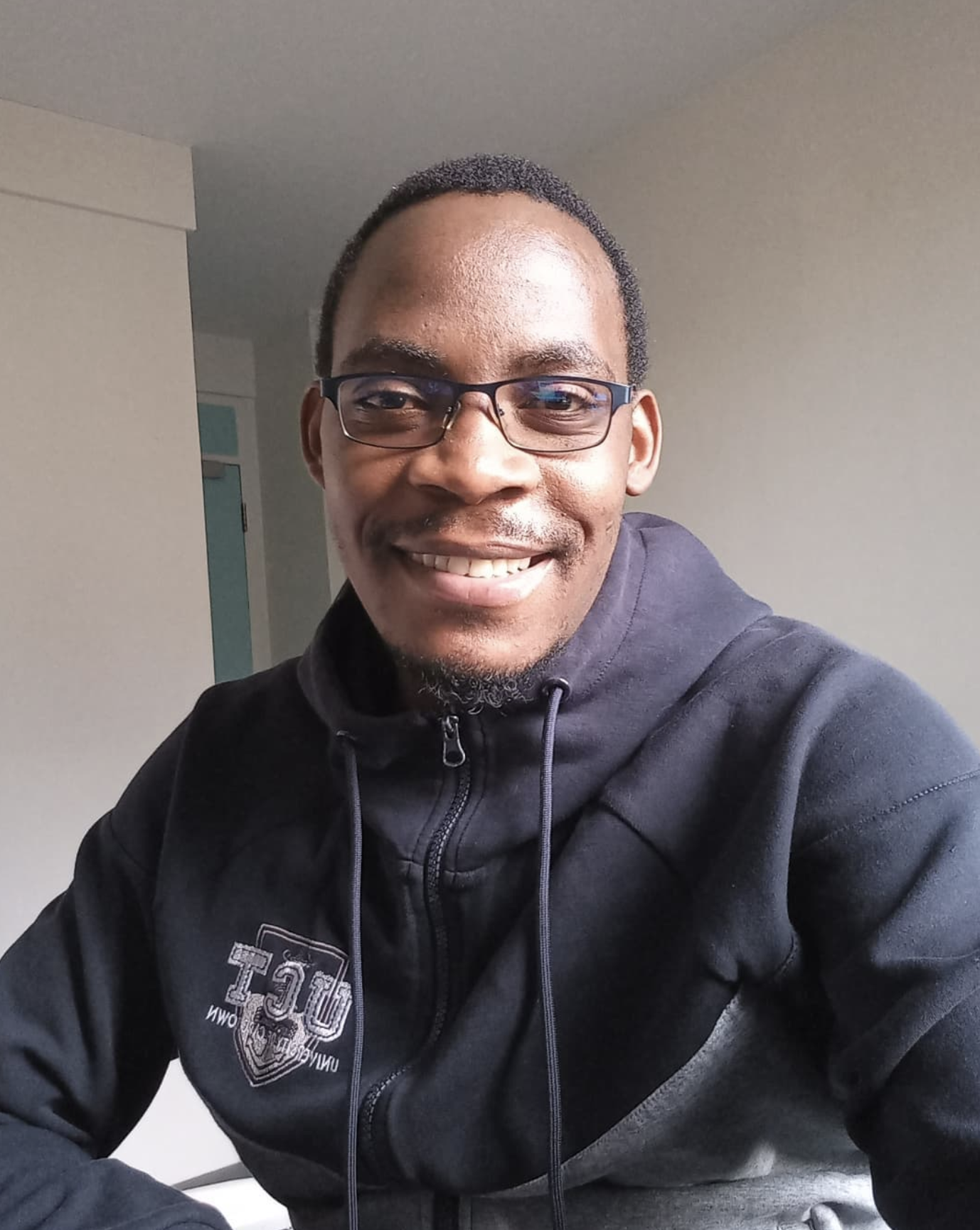
Teaching AI what healthy looks like, so it can catch what isn't
Machine Learning | Deep Learning | Health Informatics | Medical Imaging
Some problems are too important to leave unsolved. I'm Alex Mirugwe, a PhD researcher in Artificial Intelligence at Queensland University of Technology, Australia, developing generative AI methods for unsupervised anomaly detection in medical imaging: models that learn what healthy anatomy looks like well enough to flag rare or subtle pathologies without relying on the large annotated datasets that are rarely available in real clinical practice.
This builds directly on four-plus years as a Data Scientist working at the intersection of ML and public health, where I developed and deployed models that shaped real responses to HIV, cancer, tuberculosis, and public health emergencies. That work is where the research question came from: how do you build AI that's genuinely useful when the data isn't perfect and annotations are scarce?
Always happy to connect with people working on AI for health, generative modeling, or anything at that intersection.
Projects showcasing expertise in machine learning, deep learning, computer vision, and NLP, with applications in healthcare and ecology.
Comparative study of CNN architectures for tuberculosis detection in chest X-ray images using transfer learning and deep learning, achieving state-of-the-art diagnostic accuracy to support clinicians in resource-limited settings.
Read Publication
AI-powered screening tool that improved early cervical cancer detection accuracy in Uganda, enabling faster diagnosis in underserved clinical settings.
View Project
Reduced HIV patient data duplicates by 4.8% across Uganda's national health system.
View Project
Analyzed public sentiment during Uganda's 2022 Ebola outbreak to inform risk communication strategies.
View Project
Automated bird species detection from webcam footage -- MSc thesis project at University of Cape Town.
View Project
ML-based recommendation engine for personalized content delivery.
View Project
Implementation of AES and RSA encryption algorithms for secure healthcare data protection.
View ProjectOpen to research collaborations, talks, and PhD networking, alongside select consultancy work.
Keen to collaborate on generative AI, anomaly detection, or ML for healthcare, as a co-author, reviewer, or sounding board.
Available for guest lectures, seminars, and talks on generative AI, medical imaging, and applied machine learning in health.
Selective, part-time consulting on ML/AI systems for healthcare organizations, from model design to deployment.
Comprehensive training in statistics, data analysis, and machine learning with R and Python.
Explore my latest thoughts and insights on data science and AI.
The claim that superintelligence is a near-term destination has no training distribution, no mechanism, no benchmark, and no precedent. This paper draws on scaling laws, data exhaustion projections, and embodied cognition to show the gap is being closed by rhetoric, not evidence.
Read MoreAI diagnostic tools are cleared worldwide on benchmark accuracy alone — a metric that tells clinicians little about real-world performance. This paper argues the field has built its evidence edifice on an unstable foundation, and calls for global coordination to fix it.
Read MoreWe tested a transformer-based model on Uganda's national HIV data across 56 districts — and it flagged every at-risk patient before they disappeared from care. The results surprised us.
Read MoreAI tools are ubiquitous, but many overlook the basics and end up with a superficial understanding. In this piece, I explain why that matters and how to build real expertise.
Read MoreToo many teams and organizations dive into AI without a clear plan - no defined use cases, no ROI thinking, just fear of missing out. This article unpacks why hype isn't enough and what real strategy looks like.
Read MoreAfrica is missing from the global AI revolution. Why? What can be done? This article explores the challenges and opportunities for AI in Africa.
Read MoreOpenAI's ambitious proposal to build 5-to-7 massive 5-gigawatt data centers. I explore what this means for AI development, global energy use, and sustainability.
Read MoreOpen to research collaborations, talks, PhD networking, or select consultancy work. Reach out and let's talk.
QUT Gardens Point Campus, QUT S Block
Brisbane City QLD 4000, Australia